The health insurance industry is growing rapidly and is set to reach a value of $4 trillion by 2027.
However, with massive growth comes increased competition. So, let’s break down the top marketing strategies to make your health insurance company stand out from the crowd.
Know Your Target
Since many people receive coverage through their jobs or the government, not everyone is in the market for private health insurance. That means insurers must deliver a targeted campaign that specifically appeals to key demographics.
Young Professionals
Young professionals between the ages of 20-30 years old are a key group to target because they are often starting new careers and looking to transition off their parents’ insurance plans.
Acquiring a young client base can yield massive returns because they’ll often become long-term customers if they are satisfied with your service.
Families
Private insurance is appealing to family units since it can provide maternity care and pediatric services that may not be covered by their jobs or the government.
Targeting family units with your advertising can offer a sizable return on investment since they are looking for insurance plans to cover multiple individuals.
Self-Employed
Self-employed consumers, due to the nature of their careers, don’t receive employee benefits and will need to seek out a private insurance provider.
When marketing to this group, it’s important to highlight how your insurance plan provides flexibility, affordability, and access to a wide network of healthcare providers. All these factors are important to self-employed individuals as they’ve often chosen their career path for increased flexibility and freedom.
Understand Their Pain Points
Health insurance providers must send a message to consumers that they understand and can solve the various headaches associated with finding a health insurance plan. Here are three of the most common pain points consumers face when looking for healthcare coverage:
- Inability to find good coverage at an affordable price
- Confusing and unclear explanations of what is covered and what is not
- Lack of flexibility
It’s these user experience pain points that tend to scare consumers away from private insurers because they feel intimidated and insecure when choosing a plan.
Market The Transformation
By understanding these pain points, you can center your marketing messaging around how your company solves them. You’ll want to use clear and concise ad copy that quickly communicates to potential clients why your insurance company is unique and superior to other providers.
The core of marketing is all about selling the transformation. So, images of smiling individuals or families with messaging about how they now feel secure are essential.
Creating convincing content is certainly important, but an equally important step is finding the best way to deliver your advertisement to ensure it reaches your target audience.
Wellness Boards
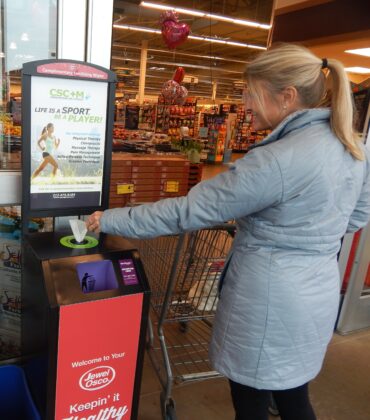
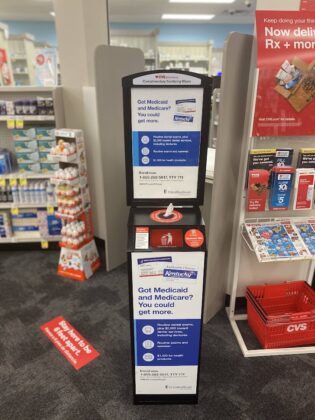
One of the best ways to reach target audiences is by reaching them when they are out of the home and engaging with their surroundings. In terms of in-store advertising, few mediums compare to the effectiveness of wellness billboards that can be placed at supermarket entrances, gyms, and pharmacy waiting areas. These wellness billboards offer in-store shoppers sanitizing wipes below a prominently featured advertisement.
Pharmacy wait areas are an ideal placement for healthcare industry advertising as they provide the correct contextual setting to connect with consumers.
Terraboost is a leader in this advertising medium and independent studies have shown that 80% of shoppers take a sanitizing wipe from their billboards and that 50% take a coupon or brochure to learn more about the sponsored brand.
Referrals
Both in-store and online advertising have their place in health insurance marketing campaigns but don’t underestimate the utility of word-of-mouth marketing.
Many health insurance companies have found success in partnering with doctors to set up referral programs. By finding doctors to become your brand ambassadors, you can organically boost brand awareness and bring in new clients.
What’s great about having doctors refer your insurance program is that consumers will tend to regard your company as reputable since they associate it with the medical professional they trust. You can generate even higher conversion rates by offering patients exclusive perks, such as discounted membership if they sign up via their doctor.
Google Map Pack Ads
It’s immensely important for local health insurance companies to fully utilize Google Maps to boost their online presence since 85% of Internet users use Google Maps to find local products and services.
The Google Map Pack refers to the top three search results users are exposed to when they search for a service in their area. To be featured in the coveted Map Pack spots, it’s important to maintain a healthy profile on Google My Business with plenty of recent 4 and 5-star reviews. You’re company will also be listed higher if you’ve spent time citation building, meaning that your business profile appears on numerous online platforms such as social media pages and review sites.
When all else fails, you can take a shortcut and pay to have your business appear as a sponsored brand in the top search results. While this will increase brand awareness, consumers will see that this is a sponsored ad and this tends to result in lower clickthrough ratings than organically placed businesses.
Social Media Video Ads
On average, people spend 28% of their time online on social media platforms. As such, paid social media advertising can let you target tons of consumers while they are relaxed and open to promotional material.
These ads can complement your existing company social media account by featuring your content as an advertisement in user feeds. Social media companies continuously collect data on their users, which makes it easy for you to preselect which demographic groups and specific locations you wish to reach.
For the healthcare industry video marketing, nothing beats consumer testimonials. If you can create content that features clients whose lives you’ve improved, you can easily encourage other consumers to place their trust in your brand.
Consider creating different testimonial videos geared towards different demographic groups. By creating ads that feature families, young professionals, and self-employed workers, you’ll have ad content that each of your key consumer groups relates to.
Organic Local SEO
You can pay to rank your business on the Google Map Pack or through Google Pay-Per-Click Ads, but you can also utilize the search engine algorithm to organically promote your company online.
Local search engine optimization (SEO) involves conducting keyword research on the relevant terms that consumers are likely to use online when seeking health insurance. Once you’ve identified a list of key terms and phrases, you should strategically place them throughout your website content. Search engine algorithms will place certain companies higher in the search results depending on how many relevant key terms and phrases they utilize.
You can drive even more organic traffic by producing high-quality articles and blog posts that answer common health insurance questions. If you place those key terms and phrases into your additional content, search engines will regard your company as an expert and an educator and favor your brand in its search listings.
/
Terraboost is an innovator in healthcare marketing that has partnerships with pharmacies like CVS and Walgreens to feature their sanitizing billboards that appeal to health-conscious consumers.
If you’re looking for a competitive edge, get in touch with a Terraboost agent today for a personalized quote and key industry insights. Your brand could soon be featured across some of Terraboost’s 120,000+ wellness billboards that deliver 8.8 billion monthly engagements.